
How to become a One Health Influencer

 Spotify
 Amazon Music
 Apple Podcasts
 Podcast Addict
 Deezer
 Podchaser
 PlayerFM
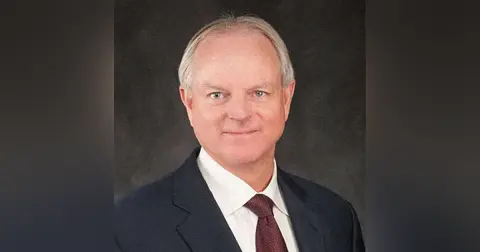
 At the GNL and UTMB, we have a long-standing history of collaborating with Texas A&M . In this episode, we talk to Dr. Gerald Parker who has an amazing career. In addition to his role as associate dean for Global One Health, Parker serves as campus director for Global One Health at Texas A&M University. Parker holds joint appointments with the Bush School of Government & Public Service as director of the Pandemic and Biosecurity Policy Program within the Scowcroft Institute for International Affairs and with Texas A&M AgriLife Research as a strategic advisor for the Institute for Infectious Animal Diseases.
Thanks for listening to the Infectious Science Podcast, we hope you enjoyed this episode. You can find more cool science content on infectiousscience.org.
Please leave us a review and share this episode with others who may be interested, and don’t hesitate to ask us questions or tell us which topics you want to hear covered in future episodes.
Thanks for listening to the Infectious Science Podcast. Be sure to visit infectiousscience.org to join the conversation, access the show notes, and don’t forget to sign up for our newsletter to receive our free materials.
We hope you enjoyed this new episode of Infectious Science, and if you did, please leave us a review on Apple Podcasts and Spotify. Please share this episode with others who may be interested in this topic!
Also, please don’t hesitate to ask questions or tell us which topics you want us to cover in future episodes. To get in touch, drop us a line in the comment section or send us a message on social media.
Twitter @Infectious_Sci
Instagram @tick_virus
Facebook Infectious Science Podcast
See you next time for a new episode!
Welcome to the Infectious Science Podcast.
SPEAKER_02This is not just another science podcast.
SPEAKER_01Nope. Infectious science is produced by a team from the University of Texas Medical Branch and the Galveston National Lab, where we study some of the most dangerous viruses on the planet. Our goal is to inspire future scientists towards a career in science with a focus on one health.
SPEAKER_02One health, one planet.
SPEAKER_01That's right. One Health approaches public health threats by examining the connections between people, plants, animals, and the environment we all share.
SPEAKER_02This show will explore how One Health is your health. So sit back and learn something.
SPEAKER_01Infectious Science, where enthusiasm for science is contagious.
SPEAKER_02All right. Well, hello, everybody. Welcome back to Infectious Science. This is Dr. Matthew Dasho, Associate Professor of Internal Medicine at University of Texas Medical Branch. Welcome everybody. And I'm here today with a good friend and colleague, Dr. Jerry Parker. Welcome, Dr. Parker.
SPEAKER_00Well, thank you very much for um having me today. Looking forward to it.
SPEAKER_02Yeah. So uh you don't mind if I call you Jerry. That's fine. Okay. So, Jerry, um, thanks for being here. Thanks for talking to us. Thanks for taking the time to out of your busy day to share a moment with us and the folks out there who want to learn a little something about One Health. Maybe let's start by uh introducing yourself, what you do here in lovely Bryan College Station.
SPEAKER_00Sure, thank you very much. So, yeah, again, I'm Dr. Jerry Parker, and I'm uh wear a couple hats here at Texas AM. I'm the Associate Dean for Global One Health at the College of Veterinary Medicine and also the director of a pandemic and biosecurity policy program at the Skullcroft Institute for International Affairs at the Bush School of Government and Public Service.
SPEAKER_02That's a lot of positions and a lot of uh responsibilities. You you weren't always in academics, though. You got to academics through a a variety of different pathways. Tell us a little about your trajectory, what got you here?
SPEAKER_00Yes. So I'm kind of a late comer to academics, but my career actually started here at Texas's AM as a student many years ago. And uh when I left the College of Veterinary Medicine and graduated with a DVM. Yeah, I'll go ahead and say that the date. It was 1977, so I've already dated myself, but that's okay. That's all right. Uh uh, I went in the military. I went into um Army medicine and started out in kind of basic veterinary medicine at Fort Lee, Virginia. But then I got an opportunity to go into laboratory animal medicine and and research and then that that got me into an assignment at the U.S. Army Medical Research Institute of Infectious Diseases. And I got interested in biodefense and uh high containment laboratories and and everything associated with uh high containment laboratory uh research uh with dangerous pathogens and um was afforded the opportunity to go back to graduate school at Baylor College of Medicine to get a PhD and right back to USAMRID. I guess I didn't use the acronym a while ago, but uh USAMRID, USAMRID, is uh the acronym for the U.S. Army Medical Research Institute of Infectious Diseases, which is the Army's only maximum containment BSO4 lab. And went into management and leadership. Ultimately was the commander of USAMRID for about two and a half years before I was selected to go back to senior service school and retire from the Army in 2004 after 911, the anthrax ladder attacks and everything associated with that, and went to the Department of Homeland Security and uh was responsible for a lot of the biodefense programs and Homeland Security before I was asked to come over to the Department of Health and Human Services, where I served as the principal deputy assistant secretary for preparedness response. And then my last uh tour in government service was deputy assistant secretary for chemical and biological defense until 2013 when I came to Texas AM.
SPEAKER_02Man, that is an aspirational trajectory. Your students must learn so much from hearing those stories from those various parts of your life.
SPEAKER_00Well, you know, it's interesting because as a student, I had no idea that there was a laboratory, a high containment laboratory called USAMRIT. I had no idea that we had a biodefense program. And, you know, some asked me, oh, well, how'd you do it? And sometimes I'd kind of jokingly say, Well, a lot of hard work got me in this trajectory and a little luck as well. But the luck doesn't come unless you do the hard work.
SPEAKER_02Tell us about a high containment laboratory. What does a high containment laboratory study? What does it do? And what got you interested in doing that work in the first place?
SPEAKER_00Um, well, I first really got from that experience as a in laboratory animal medicine, I really got the interest in actually being the researcher as opposed to supporting research through laboratory animal medicine. And it was really that first assignment at USAMRIT and understanding and really becoming a student of biodefense and what that entailed and a student of high containment laboratories that really catalyzed my my interest and knowing this is what I want to do the rest of my career. And uh so high containment laboratories just allows the opportunity for scientists to study um highly infectious and dangerous pathogens in a safe and secure way. That research that we do in high containment laboratories really underpins everything we do in biodefense and public health preparedness. We have to we have to study some of the most dangerous pathogens to be able to understand how to counter these pathogens by developing vaccines, diagnostics, and therapeutics. And so that experience at USAMRID, where I spent a lot of my career before I went into civilian uh service, still in the government, really was the foundation of what I did after I left the military and what I'm doing now.
SPEAKER_02And tell us about what you're doing now. You're directing this really amazing Center for Global One Health here at Texas AM. What's the center all about?
SPEAKER_00Sure. It's really not a center, it's a program. And I really see uh my job in global one health, which is also kind of interesting because we use that word global instead of just one health. And I'll just maybe unpack that a little bit first.
SPEAKER_02Yeah, that'd be great. Because I think you're maybe the one of the only programs I've seen that's paired up global and one health. A lot of us work in global health, and then there's one health, and you know, you are clearly bringing a different perspective to this concept of one health. So that'd be great if you can unpack that.
SPEAKER_00Sure. Well, so yeah, I think first one health is underappreciated here in the United States. And really where the needs are in that one health space are really at that human, animal environment nexus, and where that's really, really important from an infectious disease perspective is the next pandemic is most likely going to emerge somewhere where there's in other parts of the world, not the United States, although it could. We've been surprised before, it could emerge here. But where it's more likely to emerge is where there's extreme poverty. We certainly have extreme pockets of extreme poverty in the United States too. But there are areas in the world where some of these dangerous viruses are more likely to emerge, and that's where it's much more important that we have the health community, the veterinary community, the environmental, the ecologists to working together in a multidisciplinary fashion to try to try to understand these um potentially dangerous viruses and how they may emerge. But more importantly, how do we have capacities, public health and animal health capacities in these areas so that we can quickly determine, detect, diagnose, and begin to respond? And so global, it's just the extension of one health, but we have to think about it on the international stage.
SPEAKER_02Yeah, I love that because I always think about global health as really being all about our interconnectedness and that we all share the same planet. We all live in different environments, of course, but we have so many shared things on this rock we call Earth. And diseases that emerge in one place can be on a plane and be here the next day. We have very unique interactions with other animal species. And so it's really cool that you guys have dedicated yourselves really to looking at that aspect of not just spillover and lab and but really taking that out to the world. That seems to me to be a really valuable effort.
SPEAKER_00And really the global one health is really just an extension into the terminology of global health. It's just making sure that we talk about the connectedness to the animal world, the human health world, and ecology and environment and so forth.
SPEAKER_02Yeah. What I've seen is that addressing those real big, hairy, complex problems is a team sport.
SPEAKER_00Definitely.
SPEAKER_02And so having the ability to try to bring all those actors to the table really is one of those unique things about One Health.
SPEAKER_00Definitely. And you know, sometimes we in our organizational bureaucracies, whether that be in government or academia or industry, don't learn how to play team sports very well. And so we have to do a much better job. And I've actually have a lot more confidence in the next generation that's coming up uh through the through the ranks that it's going to be much more reflexive to work in a multidisciplinary team sport environment than my generation.
SPEAKER_02Yeah, I think we see that certainly with students coming up. They're so good at thinking about problems in a broad way.
SPEAKER_00Yeah, that's fantastic.
SPEAKER_02That's what we want. We want to reach those folks and help them understand how important this concept is and how we can bring it to bear on the future and what's to come. When you took your career in the direction of policy, you know, uh sometimes uh I remember talking to someone and they they they said, you know, anytime someone starts talking about policy, my eyes glaze over. It's like an automated reaction. I just start to feel like a nap coming on. Why is policy so important in One Health? And why is it important and what is going on? You you've had a front row seat and you've seen this evolve over a period of decades. Not only why should people be concerned about what's happening in policy, but what should they be paying attention to?
SPEAKER_00I'm glad we're gonna unpack that a little bit. And, you know, I would say what's really important is science and policy have got to be much more integrated. And I think in the past we've had the policy world and the political world really kind of completely divorced from the science world, and the scientists didn't want to get involved in policy, but good policy has got to be grounded in good science. And so we have to have this nexus between open communications and being able to translate science to the policy leaders who don't understand science. So it's extremely critical that that we do that. And I guess my eyes were really opened up to that in the Army. When I was in senior leadership positions in the Army, having to translate what we did at USAMRA to senior leaders, policy leaders in the Pentagon as an example, and why biodefense, and at the time we were worried about proliferation of weapons and mass destruction back in the late 90s, and bio was one of those things that we had to be concerned about. But then it really dawned on me when I was at HHS as a principal deputy assistant secretary for preparedness and response as President Bush, and finally took preparedness very seriously in 2005 and 2006 after Hurricane Katrina. So we were also kind of experiencing, you know, the worst natural disaster in the United States. But at the same time, we submitted a budget to Congress, an emergency supplemental budget, not through the normal process, for about $7 billion. For the first time, we had policy leaders that had listened to scientists and that we knew that we had some H5N1 popping up in parts of the world, Asia is where it started. And whenever it did spill over from animals to humans, it was a 50% mortality. Now we didn't know if that was going to continue or not, but we knew that pandemics had happened in the past, and they were committed that we are going to be the first times that society is going to do something to prepare for pandemic. Whether we could get there or not, that it was a conscious policy decision informed by science and what was happening in the world that we needed to prepare. And that's, you know, I was right in the middle of that, those discussions and deliberations and building the budget and saw how it worked from the administration to Congress, and then implementing that once the monies were appropriated. And it was an exciting time for public health. Never before had that much money been appropriated for public health, public health preparedness for a pandemic, and we made a lot of progress.
SPEAKER_02Yeah. I think about students and folks in graduate programs or undergraduate programs coming up right now, trying to figure out what their direction is going to be, right? There's so many ways to go. And some of them may never even think about going into policy, and especially if they're interested in science or they're studying science. And I love that you mentioned that point about how important it is that science be translated to policymakers. Because I think we're such a big country and we're such a big world. So many times people feel like, oh, those, you know, those policymakers are so disconnected. They're not in tune with what's important to me, what's important to my community. They're just up there in Washington or they're up there in Austin, or they're just making their decisions. And I think it's good for people to know that actually there are scientists every day who are presenting and trying to help educate those policymakers. And that despite what people may think from whatever they can get on social media, that in general, probably there are a lot of good-minded policymakers that really want to do the right thing. They just may not know what that looks like. Is that accurate?
SPEAKER_00That is. There's so much, you know, that we take the wrong impression by the daily news and things we're hearing, social media, like you said, but there are many dedicated professionals, and all used from the scientific world that make it up to some of the positions like I served in. Very dedicated and very committed. And they're likewise elected officials and policymakers that also want to listen. Not everybody, but there are those who want to listen and want to be educated and want to do the right thing and want to make sure that it's informed by good science in the case of pandemic preparedness or infectious diseases. Again, not everybody, but that's our job as professionals to try to educate as best we can when we are in those positions, to try to inform decisions so that they will that would be good for our country and and and good for the world when we are trying to counter and establish pandemic uh preparedness and public health preparedness type programs.
SPEAKER_02Yeah, there's so much that we can do for the world. And we always tend to think that just we have these two oceans on either side of us, and that's good enough. And I always think about that concept that when there are more scientists and public health experts and even just general scientific literacy across the world, and people know more and they're aware of more, and they're they're empowered to study these problems where they emerge, that makes us all safer.
SPEAKER_00Absolutely. Yeah, absolutely.
SPEAKER_02You know, I'll I'll talk to some folks and I'll say, why are we spending all these resources in sub-Saharan Africa or in Latin America? Why are those dollars not coming right here back home? Well, those areas are in desperate need and with talented, amazing people on the ground who can get things done. So I really think that that's a really cool approach that you've taken through your career. And it's so fascinating that you've had this front row ticket to see a lot of these discussions in action. What do you think has been, let's not say failure, let's say challenges that we have faced, both in preparing for this pandemic, responding to it, and where does it leave us for the next one?
SPEAKER_00Boy, where do I start? Well, I actually I'll I'll start because I think many of us that have been working in public health, global health, public health preparedness specifically, and pandemic preparedness over the years knew that a COVID-19 type event was on the horizon. It was inevitable for many reasons that we probably don't have time on this podcast to unpack, but we can unpack it on a future one. But for many reasons, it was inevitable. We just didn't know when it would occur, perhaps where it would start or what it would be. But we knew there was a disease X out there that the WHO, even in 2019, put on their list of priority pathogens and disease X is the unknown. And uh so we knew that unknown was in our future, and that unknown emerged uh at the end of 2019 that became the COVID-19 pandemic. So I think, you know, maybe some of the things that before COVID-19, and sometimes, you know, if I want to be a little bit hard on myself, what else could have I done to try to encourage more investments and more change in just our US government policies toward pandemic preparedness? Because there's something I could have done. So I asked myself that often from my time in government and outside government, trying to influence the policy debates from outside government from academia. And maybe there was, I don't know. Uh but many of us were trying to. And we talked about um complacency. We're as a society where we face a threat, we face a challenge, it's over, and we go on to the next problem. So I do think as a society we were in a period of complacency in between challenging outbreaks that we could have done more. So after COVID-19 began to emerge, even before it was named COVID-19, I think some of the challenges that we faced and continue to face today is, and you'll be surprised probably by my answer, and one of the maybe one of our biggest failures is basically communication. Everybody's gonna go to antivirals, vaccines, and diagnose, you know. But really it's communication, and that takes on many, many different avenues about the missed opportunities for risk communication and communicating, you know, more accurately in the early days that this looks serious. We don't ex know exactly how it's gonna unfold, but something is unfolding. And I think we don't have to debate about the politics and public health and so forth, but public health itself could have taken a strategy that this looks serious, and this is what we know today, and this is the guidance that we are gonna put out today, but it may change tomorrow. It will change in the future as we learn more. And we're gonna learn more each day, and our guidance is gonna evolve and then every day come back with that same message. And so the public gets in this battle rhythm of having more trust and confidence in the message that it's gonna change. And we still face that problem today.
SPEAKER_02No, you're right on the money. I actually think communication has been one of the greatest challenges from everybody from frontline clinicians to policymakers to public health workers to someone who is just trying to figure out what decisions to make. Yeah. Oh, yeah. Where to consume your information, who to listen to, clarity of message. It's very difficult. It is. Oh, it is. It's very difficult. And it's also so hard to manage. It is. To manage the message.
SPEAKER_00And I don't want to be too critical on any person, any organization. It is hard. It is really, really hard.
SPEAKER_02We also don't really like it when things change. I remember back to the beginning where everybody actually there was that solidarity moment. People were okay staying at home. They were worried enough about what was going to happen. And as messaging changed, as the pandemic evolved and it continues to evolve, we've grown so weary and we've grown so tired of the change. And this this entity changed their guidance and then they changed it back, and then they changed it, which they're supposed to do. If they listen to scientists, we're always gonna try to come up with the best information based on the best data that we can collect. And then it changes, and especially with a new pathogen. So I think that's a really astute observation. And I taking that idea of communication back to One Health, what do you think for people who are interested in One Health or kind of thinking this is a concept that seems a little vague to me as a clinician, as a human clinician, what's always really resonated to me about One Health is that so much of it is about communication, not just between, let's say, a clinician and a patient, or even a policymaker and a scientist, but different sectors having to work together and learn their common language. Talk a little bit about that. Sure. Yeah.
SPEAKER_00And I think that's the concept and the strategy of One Health, really, when you dissect everything out, it is teamwork. It's about teamwork. And it's about working with different disciplines. It's about making yourself get out of your comfort zone and working with entirely different disciplines that uh maybe, maybe it's not even health. Throughout my career, I had to understand law enforcement, I had to understand intelligence, I had to understand medicine, I had to understand and learn the healthcare system, even though I'm a veterinarian. But I learned all those components pretty well, and I could communicate in various groups readily. And so that at the end of the day, when I think about one health, it's really as simple as multidisciplinary teamwork that's needed to solve today's hard global challenges. And so the one that I'm most interested in is emerging infectious diseases, of course, and pandemic preparedness and public health preparedness, but it really comes down to multidisciplinary teamwork again to solve hard problems. And pandemic preparedness, public health is one of our global challenges and hard problems of the day. There are others, but that's certainly one of them.
SPEAKER_02Would you say that one of the things that it really takes to, I think, be successful in a one health approach is some degree of humility? Oh, a lot.
SPEAKER_00And we need a lot more humility today. We need more humility and less hubris.
SPEAKER_02I like it. Yeah, it's something that I even myself, having been a recent acolyte into one health, I've noticed that when I'm doing one health-related work, if I actually take the time to listen and to understand that I really don't have all the answers. I have more questions than answers. And there are these incredible, capable people from other professions, other cultures, other parts of the world that have something to say and also have some expertise that we don't have. So it's really about humbling yourself so that you can share in a more effective way to combat those.
SPEAKER_00You know, and I call it, I would call it culturally competent. You know, whether it's culturally competent working in a community in a city in the United States, or if it's culturally competent, you know, working on the global stage. And I'll use an anecdote back to my time in the military if I could, but that was also kind of maybe eye-opening for me and a learning moment for me is when I was at senior service college that I mentioned earlier, which is really war college for senior military officers as they're going to be elevated into different newer positions. That was also an eye opening experience for me where I really understood better how to think about problems from somebody else's perspective and try to walk in somebody else's shoes. In this case, it was kind of government interagents. It was military, but we had State Department, USDA and health. Other government agencies were there at senior service school. And so it really taught me and my classmates how to think about their perspectives. And I had to walk in their shoes, but that makes you listen and makes you think about solutions in a more holistic way. That's One Health.
SPEAKER_01A virus that clearly illustrates the One Health concept is lots of virus, which causes loss of fever. The virus is typically found in West Africa and usually infects rats. People get it from household items or food that's contaminated with rat urine or rat feces. And you can also get it from eating an infected rat. Now remember, rat meat is more common in some parts of the world and can even be considered a delicacy. The disease starts out with a fever, pen and body aches, and progresses through cough, chest pain, and onto severe abdomen pain with nausea and diarrhea. The World Health Organization estimates between 100 and 300,000 people get LASA every year. And there was a recent outbreak in Nigeria in January 2022 with 211 confirmed cases. Unfortunately, 40 people passed away in that outbreak, and that's a fatality rate of 19%. Now you know about loss of fever, and that's been your viral minute.
SPEAKER_02You know, they may think, wait, you went off to war school, but you were talking about humbling yourself. I don't understand this. And we we sometimes think that these things they're not in other forms of education like for our armed services. But in fact, for people who want to do global engagement work, it sounds like you're saying there's actually pathways even in the armed services or in the uniformed services that could fit. Oh, absolutely. You know, absolutely interested in one health.
SPEAKER_00Oh, absolutely. Army medicine, Navy medicine, Air Force medicine. It has wonderful opportunities domestically and internationally. Few people know that the military actually, we have this wonderful, unique asset. It's called our overseas laboratories. And we have three or four today where we used to have six or seven twenty years ago, but they are located in strategic locations in the world where actually where there were disease hotspots, and they were really put there in the first place for emerging infectious diseases. And these laboratories don't serve much more than the host country they're in, they serve the whole region. For example, we have one in Cairo, Egypt, but it serves the whole African region, sub-Saharan Africa. And the relationships that that military overseas laboratory develops through that whole region are unbelievable. And so people mistakenly think that there's a lot of tension between military and civilian in these worlds, but they're not. There's extreme collaboration between military and civilian authorities that is promoted and catalyzed by this one example of our overseas laboratories in parts of the world. Then they provide us a lot of information, one about protecting U.S. citizens and U.S. armed forces that are deployed to these areas and gives us the opportunity to have a global surveillance, part of a global surveillance network, coupled with CDC overseas labs and a lot of our international partners. So there's an unbelievably great opportunities for those and that may you know consider the military. And the educational opportunities, I got my education paid for by the Army. Both the veterinary DVM was I was on a health professional scholarship, but my PhD was also funded by the Army as well. So I was on I was on active duty at Baylor College of Medicine as an Army major, getting my PhD. Yeah. What a deal.
SPEAKER_02Incredible. I remember you mentioned the global outreach. I remember being in the Naval Medical Research Unit 6 in Peru. And it's a high-tech facility, and it's extremely collaborative with the Ministry of Health, with uniformed forces in Peru. And so it collaboration takes all different forms. And I think that's what One Health really is all about, is about collaboration.
SPEAKER_00Oh, it is. And just maybe if I can unpack a little bit more in that kind of mills of uh type collaboration, you know, often we go through periods where we have great power rivalries and we have countries that maybe may not have our best interests in mind. But at the end of the day, medicine and science is a common language, even with adversaries. So that scientific and medical collaboration, even amongst countries that have tension, is incredibly important to maintain. And so we have a couple of examples today: China, Russia, but there continues as best we can communications and dialogue between scientists in these countries. And that's going to pay off in the long run.
SPEAKER_02Absolutely. That form of scientific diplomacy is extremely important. At some point, scientists have to be able to collaborate with one another and make us more prepared for whatever's coming next. If we're not able to get along with one another, we're not secure. It's not just not secure from bombs and guns and potential for armed conflict, but we're not secure if we allow emerging diseases to flourish in an area we don't know about it. We can't, we're not working with people. We haven't established that trust. So it's a tough tightrope to walk. It is. Are you optimistic about what comes out of this regarding that tightrope? We know SARS-CoV-2 was, in a way, a bit of a kick in the pants, a reality check. Like you mentioned, I think really well before that we we knew this was going to come. We knew something was coming. We didn't know what. As we look to the future, where we see, you know, what Dr. Morrins and Dr. Fauci have written about as we're in an age or an era of pandemics. So what does that look like as far as health security, as far as biodefense, as far as being prepared for the next pandemic? How does it look? What should we take from this and carry forward? That's a big, huge loaded question. But from the Dr. Jerry Parker perspective, in your work, what is what is true? You said what could you have done? What will you do now that we're in the midst of this ongoing pandemic? What are we going to do to prepare for the next one?
SPEAKER_00Sure. You know, and there there is a lot in that question and commentary. And so, you know, I have mixed emotions. On the one hand, I do worry that now everybody, society, is rightfully very tired and understandably very tired and are kind of done with discussion of a pandemic. And so I do worry about complacency and that we are going to have commitment as a society because our elected officials only really do what society elects them to office to do. But that's why our voice is going to be very important moving forward. So I do worry about complacency, but I'm just going to double down on being allowed a voice and doing more writing and more speaking, more engagement in Washington, D.C. to be part of the policy discussion, I guess, and here in the state, and to talk about the importance of public health preparedness and pandemic preparedness. And I'm worried right now because some of the new strategies that have been put out by the Biden administration, although they're very important, they're talking about future preparedness and how we have to start getting ready for the next as we continue to fight COVID-19, but they've left out one health in the current strategies. They're being made aware of that, that that's an omission, but that's going to be something that you're going to have to push on, you know, very hard. It's going to be very important that we have the right strategies in place. We're going to make the investments for manufacturing vaccine capacities, an example. And we do so in a way that engages the international community. And we have, you know, certain areas in the world where we have large centralized manufacturing capacities, but we also have to take advantage of the, say, the mRNA platform technologies that's more chemical synthesis. And that's going to enable smaller platform manufacturing capacities in areas of the world that doesn't have it yet. So there's a lot of strategies, but we have to focus on the animal and the environment that's not in the strategies right now. And so I'm a one of the things I'm going to do is be a bigger voice for that. But be a big voice on why we need to not get complacent, understand we're tired, but we've got to get through COVID-19 and we are learning how to live with SARS-CoV-2. And I think we'll be better prepared for the next variant that is sure to come. You know, because I can't tell you right now if we're in the middle of this pandemic or we're toward the end of the pandemic. I think everybody wants to be at the end of the pandemic, so do I. And I hope we are, but I don't know. But I do know that we have to take getting ready for the next pandemic much more seriously than we did before. And that will take commitment, that will take investments, it'll take a better leadership and a better leadership environment so that we can use all of our resources, national treasure, the most effective way, which has also been a challenge in the past.
SPEAKER_02So if you're a young person and you're learning about all these things and it's overwhelming coming up in this time of a pandemic, lots of physical distance, social distance, more isolation, there could be kind of a sore taste in the mouth for some. Others may have been completely energized and feel like, how do I get engaged? What would you say to those students or to those younger folks who are looking at this world and are feeling uncertain? How can they prepare themselves? What kind of things should they can they advocate for?
SPEAKER_00Well, first, I've been kind of encouraged with the students that I've interacted with. The experience of COVID-19, as hard as it has been, I think is encouraging some people that they want to be involved and they want to take a career trajectory that's more in public service. And doesn't have to mean you're working for a government, local, state, or federal. Public service is really kind of broadly defined, but it's how can you do better to serve society's needs. And so I think I've been encouraged by students in the next generation who are seeing this as an opportunity to do more public service, whether that's in public health, animal health, and so forth. So I'm going to do everything I can to try to encourage those who are interested in those kind of careers and help educate, you know, where those potential career opportunities are. As an example, one of the courses I lecture in here and for undergraduates is I talk about where the jobs are just in the federal government for public health. And they had no idea. And uh, you know, so that's eye-opening and it, you know, begins to stimulate thinking about what career paths. And there are many ways to work in public service. It could be in the government, it could be in the private sector, it could be in a nonprofit organization, it could be in a nonprofit organization that does work in global health internationally, anywhere. And so there are just tremendous opportunities to serve people and serve people often in underserved areas. There are opportunities to work in in industry and science and government directly and be involved in that interface of policy and science.
SPEAKER_02Wow. There's a lot of possibilities out there. I mean, I always tell students that there is in this time of pandemic where everything feels like it's kind of closed off and it's harder to travel and people are not getting out in the world like they were. People aren't traveling nearly as much. There aren't as many exchange programs, students aren't getting out there and being able to see the world. There's different levels of vaccination and risk in different countries. To me, I always feel like this is actually the time where we have to make the world a smaller place. We actually have to figure out how to get our learners back out into the field from all over the world and increase the opportunities for different youth and students and learners of all levels to interact with one another because part of what is going to help propel us into the future of being safer and more secure is if people have relationships with one another that aren't just over a video screen. They've shared meals, they've been in the same room together, they've met each other's families, they've listened to music, they've experienced those cross-cutting things that help us feel more connected. How do you see that evolving? And how do you see kind of bringing it back to your program, Global One Health? How do you see Global One Health and initiatives like that playing a role?
SPEAKER_00Sure. Well, first I would say students be patient. Because I think, like I said a minute ago, we are learning how to live with a virus and we will continue to live with a virus, even if there's a new variant that's spun out that gives us some challenges, we're going to learn how to live with it. So be a little bit patient. I think we're on the verge of being able to do more travel and have those personal interactions that were just they can't be replaced. And they really, really are helpful to sit down and have a meal with our colleagues and their families and get to know people in that very personal way. And it helps that professional way as part of the science diplomacy. So it's going to return. But then I would also say, you know, we've learned how to do um virtual and Zoom and Microsoft Teams and everything else. And so I think that may be an opportunity once we are traveling more, that in between the actual travel events, we'll be able to stay connected virtually. It's been wonderful from one perspective in some of the meetings and policy discussions or whatever, that we've been able to engage more internationally that maybe in the past would have been hard to do by having um a Zoom meeting that otherwise, even in the past before COVID-19, travel may have been just too hard. So there's some positives that we've learned how to take advantage of technology, but nothing can replace our personal relationships. And that's some of the most fond memories I do have of my career in the military and at DHS, HHS, and DOD is the travel experience and working with my colleagues and peers in other countries and can't be replaced. Very, very fond memories. And they're lifelong lasting, and then they help our national security.
SPEAKER_02Yeah. Well, I appreciate this. I think we'll bring it to a close. I want to ask a couple light questions because it's been a heavy conversation, but wide-ranging and expansive. And I want to thank Dr. Cherry Parker again for being with us today. This has really been a lot of fun to just have a conversation with you. A couple of questions that I think will just help people get to know you a little bit better. What has been your most favorite place to travel to in all your world travels? Where is the most interesting and place that you've been able to go?
SPEAKER_00Oh boy, I've been to a lot of places and they've all been fun. And I say that they've been fun because they're so different from our experience here. And so just traveling to any other country and just immersing yourself in the culture is what's fun to me. You know, something as simple as going to the grocery stores in another country. I know that sounds silly.
SPEAKER_02No, it's amazing.
SPEAKER_00It sounds silly, but going to the grocery store, just seeing how it compares to our grocery stores is just it's silly, but it's fun and it's educational about the culture of the country. I gotta say that I probably have enjoyed traveling to Asia more so. I did a lot of work in South Korea. Even one of my early Army's assignments was in South Korea. But when I was at my last assignment in the Army at DOD, we spent a lot of time working with the South Korean military and the Korean CDC and actually their emergency management and law enforcement. We were trying to catalyze more interest in biodefense and public health preparedness. This goes back to about 2010, and just trying to impart some of our, from my government perspective, interagency, whole of government approach to public health preparedness. And so we had a series of exercises every year and a lot of meetings in between the exercises, but that generated just a lot of collegiality and professional relationships. And actually, South Korea's done pretty well with COVID-19 response. And so I actually kind of look back, I can't show the evidence, but I suspect our work in that era, we called it Able Response. It was Able Response is the name of exercise that we did on an annual basis. But I suspect that Able Response and our work there actually helped prepare them. They were not complacent anymore. Because when we started doing this, they were kind of complacent. And why did why do we need to do this? But by the time we'd completed at least my involvement with it, they weren't complacent anymore. They were taking it very seriously. And I think they had to do a lot with their response to COVID-19 because they were probably one of the best around the world.
SPEAKER_02Yeah, that's definitely been written about that level of preparedness. What was your favorite food that you ate there?
SPEAKER_00Oh we know kimchi is a taste that grows on you, but it grew on me. So kimchi was was good. But the food that in South Korea is just it's wonderful. And it's just so different from what we're used to here. So it's an experience, and sometimes I wasn't sure what I was eating. But that's part of the fun.
SPEAKER_02Part of it, that's part that's part of the One Health experience, isn't it? Um that's awesome. Last question. Favorite maybe artist or musician that you've been listening to recently? Who's in your who's in your who's in your playlist right now?
SPEAKER_00That's easy. That's Chicago, the band, you know, 1960s, 1970s. That's my favorite.
SPEAKER_02I love it.
SPEAKER_00Rock and roll with a trombone and trumpet and saxophone.
SPEAKER_02Yeah, okay. Well, someday we'll uh have enough funding to pay for the rights to play that music on this show. Dr. Parker, thank you so much for being here. Really appreciate it. It's been a lot of fun to chat with you. And uh, we'll look forward to the next time. We have more to talk about.
SPEAKER_00Well, thank you very much for inviting me to join you today. Thank you.
SPEAKER_02Yeah, cheers.
SPEAKER_01Thanks for listening to the Infectio Science Podcast. Be sure to hit subscribe and visit infectious science.org to join the conversation, access the show notes, and to sign up for our newsletter and receive our free materials.
SPEAKER_02If you enjoyed this new episode of Infectious Science, please leave us a review on Apple Podcasts and Spotify and go ahead and share this episode with some of your friends.
SPEAKER_01Also, don't hesitate to ask questions and tell us what topics you'd like us to cover for future episodes. To get in touch, drop a line in the comments section or send us a message on social media.
SPEAKER_02So we'll see you next time for a new episode. And in the meantime, stay happy, stay healthy, stay interested. Want more information about One Health? Check out these resources.
SPEAKER_01First, we have the One Health Commission. The charter of the One Health Commission is to educate and create networks to improve health outcomes and the well-being of humans, plants, and animals, and to promote environmental resilience through a collaborative global one health approach. Their website is www.onehealthcommission.org.
SPEAKER_02You can also check out the One Health Initiative, which is a movement to forge co-equal, all inclusive collaborations between physicians, dentists, nurses, and other scientific, health, and environmentally related disciplines. Their website is at www.onehealthinitiative.com.
SPEAKER_01Stay happy.
SPEAKER_02Stay healthy.
SPEAKER_01Stay interested.