
Kitten Killer and the Black Market

 Spotify
 Amazon Music
 Apple Podcasts
 Podcast Addict
 Deezer
 Podchaser
 PlayerFM
 Description: In this episode, the hosts discuss a serious viral disease called Feline Infectious Peritonitis (FIP) that affects cats and is caused by a feline coronavirus. FIP is almost always fatal, and younger cats are at greater risk of developing it. The hosts also talk about the connection between animal health science, the drug industry, and society and how the One Health approach can help address issues related to animal and human health.
Show Notes:
- Introduction to Feline Coronavirus and Feline Infectious Peritonitis (FIP), a fatal disease that affects cats
- Discussion about the age group of cats most at risk of developing FIP (less than one and a half years old)
- A conversation about the increase in relinquished animals in shelters due to COVID-19 and misconceptions about pets transmitting COVID-19 to humans
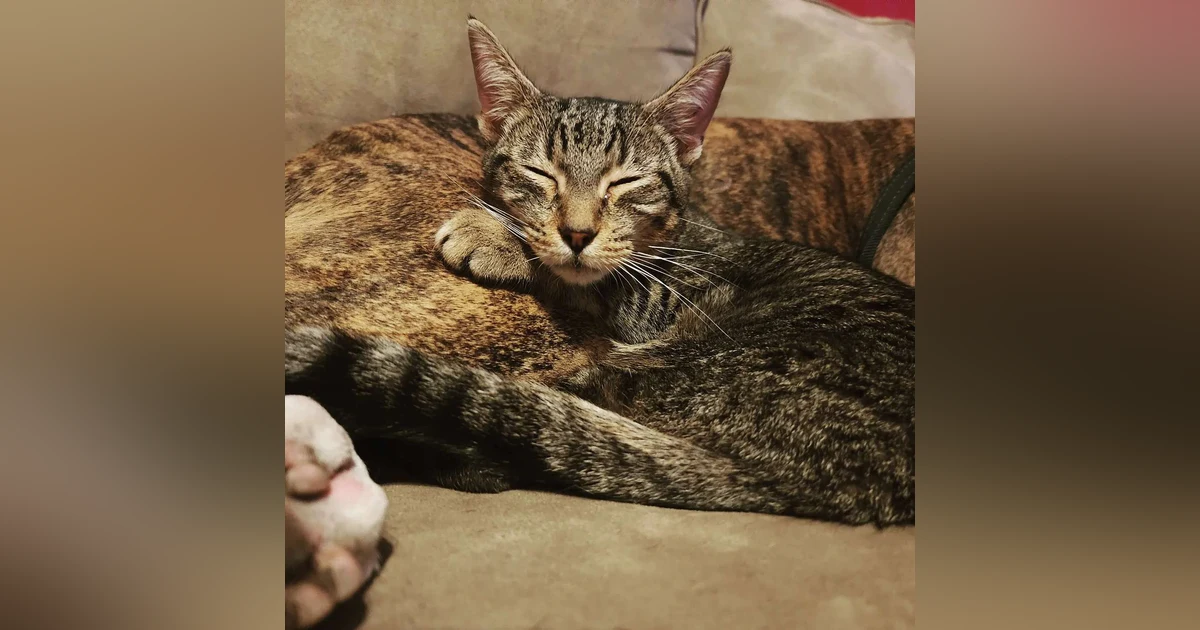
- Personal story of the host's experience with fostering and then adopting a six-month-old cat who was later diagnosed with FIP
- Explanation of how the veterinary staff diagnosed FIP and the severity of the disease
- Discussion about the drug industry's efforts to find a cure for FIP and the challenges of developing drugs for animal diseases
- Introduction to the One Health approach and how it addresses issues related to animal and human health
- Conclusion and thanks for listening
Note: The hosts mention that the story is based on true events, but the names of people and places have been changed for privacy reasons
Thanks for listening to the Infectious Science Podcast, we hope you enjoyed this episode. You can find more cool science content on infectiousscience.org.
Please leave us a review and share this episode with others who may be interested, and don’t hesitate to ask us questions or tell us which topics you want to hear covered in future episodes.
Thanks for listening to the Infectious Science Podcast. Be sure to visit infectiousscience.org to join the conversation, access the show notes, and don’t forget to sign up for our newsletter to receive our free materials.
We hope you enjoyed this new episode of Infectious Science, and if you did, please leave us a review on Apple Podcasts and Spotify. Please share this episode with others who may be interested in this topic!
Also, please don’t hesitate to ask questions or tell us which topics you want us to cover in future episodes. To get in touch, drop us a line in the comment section or send us a message on social media.
Twitter @Infectious_Sci
Instagram @tick_virus
Facebook Infectious Science Podcast
See you next time for a new episode!
Welcome to the infectious Science Podcast. This is not just another Science Podcast Nope. Infectious science is produced by a team from the University of Texas Medical Branch and the Galveston national
Matt Dacso:lab where we study some of the most dangerous viruses on the planet. Our goal
Unknown:is to inspire future scientists towards a career in science with a focus on one health, one health one planet. That's right. One of the approaches public health threats by examining the connections between people, plants, animals and the environment we all share. This show will explore how one health is your health. So sit back and learn something infectious science where enthusiasm for science is contagious. By now, if you are living on planet Earth, you have heard of coronaviruses Coronavirus, has had have been present in the animal kingdom for a very long time and have been on the radar of veterinarians for many decades. In today's episode, we are going to talk about a Coronavirus that only infects cats and is almost always fatal. This isn't a new disease. And don't worry, cats cannot transmit this Coronavirus to people but it can have serious implications for Animal Health. And here's the catch. There may be a cure, but it is not easy to get your hands on. The following discussion illustrates the connection between animal health science, the drug industry and society. It's a clear example that helps to define the One Health approach. Thanks for tuning in. We hope you learned something. The following story is based on true events, but the names of people in places have been changed.
Bente, Dennis A.:Hey, guys, how are you doing?
Connie Holubar:Oh, hey, yes. Good to see you. Have you been Danielle was just telling me the story about you and your cat?
Bente, Dennis A.:Yeah, the last week has been pretty rough for me. I don't know if I told you, Connie. But you know, in the past year, I started fostering and recently I started fostering a cat from the animal shelter. They had an emergency because so many people are surrendering the cats and dogs.
Unknown:I've heard about this. I've actually read about it, too. I didn't know you were fostering but I did hear that shelters nationwide are facing really large numbers of relinquished animals really since COVID. And they're at desperate situations. What do you think that is? Well, from what I've read, a lot of it has to do with the fact that people went out during COVID and adopted animals because they were home and they had time to do the training and the walking and then everybody went back to work and situation normal and the victims then become the dogs and cats and they're being taken aback. I also heard too, that there were even people that were concerned that they can get COVID from their pets. Oh, well, that's sad, because there's really no evidence for that. Oh, yeah, I didn't know. It is really sad. Well, I ended up fostering a fairly small six month old cats use so little, and he was a tabby and as you know, tabbies usually don't get adopted very readily. So I felt compelled almost to adopt him. He was so sweet. He would stand on its hind legs and stretch out and wanted to be picked up and he wanted to snuggle with you. He was just so affectionate and really friendly. Oh, that sounds so sweet. Yeah, I know. So when I adopted him, or when I started fostering, I noticed that he had a little bit of an inflammations left eye, but it seemed that was in the process of healing. It didn't seem new, it seemed kind of old. And I was wondering if it was related to trauma or something else. So I didn't pay a lot of attention to words. I took them home and actually got along with my dog my cat very quickly. Obviously, he was hiding under the bed initially, I think, yeah, you can expect cats. Yeah, you can. But after you know, a few days, I started wondering why he was so calm, you know, for six month old cards. He wouldn't play with them, but he would just sleep most days. Yeah, but I think cats sleep like 18 hours a day, don't they? Yes, they do. But you know, it just didn't feel right for six month old cards. And then all of a sudden things change dramatically. One day, he almost had like what I would call a neurological fit. Oh, that doesn't sound good. You know, what does that mean? Well, my dog was trying to play with them. And then all of a sudden he started to salivate his whiskers started to twitch. And then he was all of a sudden very bouncy, he just jumped up and down and just didn't look right. It made me suspicious that he maybe had eaten something toxic or something else was going on. So I actually took him to the vet the same day. It sounds pretty serious. Yeah, yeah. So the staff was super nice. And they were very busy, but they actually took him in immediately. They had a suspicion what it could be. And unfortunately, the suspicion came true very quickly after they ran a few tests. So what kind of tests what was it? Well, the cat heads feline infectious peritonitis FIP for short. Yeah, so there's no specific test for it but you can run some other tests and they are indicative that it could be FIP and together you know, with the trauma in the eye or the the inflammation in the eye, that was another hint that it could be FIP so fit this very serious viral disease in cats, and it's caused by a feline Coronavirus, a Coronavirus, so it's like a respiratory virus like for humans. COVID is a respiratory virus. Well, actually, most strains of the virus are found in the cat's gastrointestinal tract and don't really cause significant disease, but a few go on to cause FIP unfortunately, which is really deadly disease and fatal almost all the time. Oh my gosh, that sounds awful. Now, Is it contagious? Can any cat get it? Any kids that carries feeling Coronavirus is potentially at risk of developing FIP. But younger cats are at greater risk of developing FIP. So there were studies that show that approximately 70% of the cases diagnosed in cats are less than one and a half years of age. And some studies even suggest that 50% of the cases occur in cats less than seven months of age. Yeah, and the most common mode of transmission for Feline coronaviruses are believed to occur between an infected mother when she passes the virus along to her kittens, usually usually when the kittens are only between five and eight weeks of age, and the kittens that are housed in these like high density facilities like pet shops and shelters and categories appear to be a lot more susceptible to FIP. And for some reason, purebred cats and male cats and geriatric cats are also a pretty high risk, but no one really knows why. Hmm, so these crowded shelters, that doesn't sound like a good thing. So why do some cats end up with FIP? And others don't? Yeah, it's a good question. I think it's still somewhat of an enigma of what's going on. But the one of the hypotheses is that these fit viruses or the Coronavirus, and the cats, they start to mutate, and then all of a sudden, they don't infect the gastrointestinal tract anymore, all of a sudden, they infect white blood cells, and those white blood cells spread the virus throughout the body. And the body will then mount just a very intense inflammatory reaction to those viruses and those white blood cells, which causes symptoms such as fever or weight loss, fluid accumulation in different parts of the body. And that can even have neurological symptoms. So FIP is usually progressive, and it's almost always fatal without treatment. Oh, no. So there's no cure. I mean, so there's treatments for COVID but there's no cure for FIP. Well, so when I was in vet school, 20 years ago, there was no cure. I don't know Danielle. Um, yeah. So I was actually I brought my notes with me. I did some looking into this, after you told me and I don't know, it's kind of this crazy story. In 2018, a team at UC Davis led by Nels Patterson published a paper describing a small clinical trial involving 10 cats with FIP. And remember, this is a this is a disease that is almost always fatal. But when they treated the cats with this drug je s 441524. I know that's a mouthful, it's from it's from a company called Gilead Sciences. The results were amazing. 10 out of 10 Cats survived. And even in this follow up study that they did with 31 cats, all with fit 25 of them survived. So that's really, really impressive for this disease. That's almost always fatal. Yeah, it is. It's pretty amazing results. So how does this drug work? Well, like all Corona viruses, the viruses that cause FIP have an RNA genome that's made up of these kind of like molecular building blocks that we call nucleotides, you have guanine, uracil, adenine and cytosine. And in order to replicate the virus steals hours actually, or steals the cats. In this case, yes, the virus would steal the cats. There's this really interesting class of drugs called nucleoside inhibitors. And that's what this drug is it's a nucleoside inhibitors. And they're these small molecules that look almost exactly like our nucleus sides. So much so that the virus can't tell the difference. But when the virus is trying to replicate itself, they make a mistake, and they use these drugs instead of the nucleus sides and it kind of jams up the virus so that it can continue replicating and then the virus will will die. Okay, so what I'm hearing you say is, it's kind of like if you had a lock on a door, and you had a key to that door, right? And so the normal building blocks, you know, you could open the door with the key, but this creates something that looks just like that lock, but the key won't open the lock. And so the virus cannot replicate in that cell. Yeah, analogy that sort of works. That sort of works. The drugs. It's almost as if they were a key that jam the lock. It's stuck. The virus can continue replicating. Okay, interesting. Well, that's good news. It's actually not that simple. It's not licensed by the FDA. It's not an FDA approved drugs. So there's no way for vets to legally prescribe it to their patients. Danielle, do you know why it's not licensed by the FDA? Yeah, well, it's kind of this weird story. I'm not super clear on it. But the drug Gs 441524 is really closely related to another drug made by Gilead Sciences called Gs 5734. Another mouthful, but you've probably heard of it. It's called remdesivir. Oh, yeah. Yeah. So it's something we've heard of. And in fact, in an interview that I read with Dr. Pettersen, who originally did those clinical trials, he said in his preliminary studies, he tried both from Desmo beer and the other drug Gs 441524. And they both worked in cat cells. In their preliminary studies, he only even chose to focus on Gs 441524 Because it was chemically simpler. remdesivir has additional chemical modification additional phosphate group that allows it to be taken up by the cells more easily, but it didn't really seem to make any difference in those early preclinical trials and just the cat cells. Okay, so what I know about remdesivir Isn't that one of the drugs that FDA granted emergency use authorization during COVID for the treatment of COVID. And it's been tried for a lot of other viruses as well, right. So yeah, yeah, yeah, it has. So when these papers first came out in 2018, and 2019, Gilead was originally hoping to develop this drug remdesivir as a treatment for Ebola. Unfortunately, it didn't seem to be effective and never went on to get any approval. And now they're focusing on like you said, developing it for use in COVID. And while some studies have shown that there's some impact, other studies have shown the opposite, and shown that it hasn't been effective. But getting back to our main question here with FIP. Either way, it's unclear if Gilead has any interest in developing Gs 441524 or remdesivir. Either drug for licensing and cards. Well, that's kind of infuriating, considering how fatal this disease is for cats. Yeah, it really is. And it's this huge hole in the veterinary community. Yeah, that's it's really infuriating. I mean, there was nothing I could do to save the the queue, Tabby, and ultimately, I had to be euthanized. But didn't you tell me you heard something about the drug maybe was available on the black market? That's kind of what sent me a minute. Yeah, black market for cat drugs. That that I took the cat to actually said that there's a black market for for treatment. Yeah, I actually found a paper published in 2021, led by Samantha Evans at The Ohio State University, and she actually surveyed members of this group that had gotten a hold of the drug on the black market. She surveyed 393 People actually from the group. Okay, so where's this drug made? If it I mean, if it's being sold on the black market? Where is it coming from? It's not coming from the companies that created it? No, no, it's actually it appears to be coming from Chinese companies. How do you how do people find stuff like that on the black market? I mean, we don't endorse anything that's really, you know, done on the black market. Just so clear. I personally would never do this. Right. Never near a veterinarians, you know, I mean, that's pretty good advice. Yeah. Okay. So it turns out, I did a little bit of reading, and she has 441524, that mouthful of a drag is pretty easy to make, you know, a little bit about chemistry. And apparently, there was a Chinese company that tried to get licensing for the drug in China, because FIP is a problem worldwide, just like how we have a lot of cats here. There's a lot of cats in China, and the company was never able to get licensing for use in China. But it appears they started developing it anyway, and so did a lot of other companies. And that's where pretty soon pet owners across the world found out about this and turned to the black market to get a hold of the drug. It's pretty crazy. It's interesting to think about, you know, you love your pets, and you want to help them out. On one hand, it's really maddening that this drug, if it works, isn't available. But the other part is scary if the only way to get it is not illegal. Yeah. And I mean, Gilead does own the rights of this drug. You know, they developed it, it is their drugs. So legally, I guess they do have the right to say who can and can't develop it and license it. And you know, I was reading that study where they surveyed members of this Facebook group where you're able to get a hold of the drug, and people paid anywhere between $521,000 for 112 week treatment. I know it's really expensive. And in some cases, you know, cats have relapses, or in cases where the cats have neurological symptoms, they either have to have an A Increase dose or a second dose, and that would bring the total up even higher to 10,000 or$15,000. Oh my gosh, that's so much money and especially for a drug that isn't regulated, and it's being sold peer to peer through social media. I mean, how do you know if it's any good? How do you know if it's safe for your cat? It sounds pretty dangerous to me. Yeah. You can't know. And there's nothing really like this before in the veterinary community that I know of. I mean, have you heard of anything like the status? Oh, no. So what do you think what will happen next? Well, there's a couple of things going on right now. So a lot of people that I have talked to you in red, since you told me about the Stennis are hoping that remdesivir Right now, it's only under conditional approval in the US. But if it gets full licensing and full FDA approval, then veterinarians can write off label use write prescriptions for the drug off label. And I think that's what they're doing right now in the UK, where the drug is already licensed. But you know, it's kind of tricky, because all the clinical trials were done not with remdesivir. But with the other drug, Gs 441524. So we don't really know how effective remdesivir is in cats with FIP. So investigators at UC Davis looks like they've launched another clinical trial for cats and FIP, comparing remdesivir and the other drug, Gs 4415 to four, and hopefully that will lead to a more reliable way for cat owners and veterinarians to treat cats with fit. That'd be great. Because you know, Dennis is little kitty might still be alive if this drug was available. And it's something we definitely want to maybe pay attention to keep our eye on because this is sort of an interesting story. Yeah, combining the black market. Kittens and drugs manufactured. Yeah, illegally, perhaps and paying $20,000 $21,000. Yeah, it's pretty crazy. Yeah, you know, and when I was in grad school, I kind of had this feeling that if I did good science, I can have an important impact. But science happens in the real world. And there's all these other considerations. In addition to science, there's the politics and economics and the legal things and the business components to think about as well. And then there's the human aspect, what a person is willing to do when they have a sick kitten or a sick family member or something like that. This is definitely a complicated story. So Danielle, it sounds like you've done a lot of research. down the rabbit hole. Is there anything? Is there anywhere where our listeners can find more information? Yeah, definitely. I'm gonna summarize all my notes. And if you're interested, check our show notes. And I'll post a full blog with all the details. If you want to check out I'll also link the new clinical trial at UC Davis and a couple of other articles where I found interesting information. So that's great. Well, Dennis, I'm really sorry about your cat. Yeah. Your week gets better and I hope that you know, there's good news and good resolution to this with this drug. Yeah, road it'd be we'll see what happens. Yeah. Interesting. And go out and um, foster cats and dogs. Yeah. So big needs right now. Yeah, yeah, definitely. Rabies is a major public health problem worldwide. In fact, there are about a 59,000 deaths per year, and that's one death every nine minutes. And unfortunately, 40% of those deaths occur in children. Rabies is usually transmitted by the bite of an infected animal. And globally, the most common way to become exposed to rabies is the bite of a dog. And in fact, 99% of cases are from dog bites worldwide. A big problem with rabies is that it's fatal and symptoms appear which is really scary. And it's tragic because rabies is 100% preventable by vaccines. And we have really good vaccines available for mammals, including humans, dogs, raccoons, etc. And as a scientist, the thing I find most interesting about rabies is that it's capable of modifying host behavior. So for example, in herbivores are typical animals of prey, the virus will make them more docile and increase the likelihood that they can become attacked by a predator. In the other hand, when carnivores are infected, they become more aggressive or rabid as they say, now you know about rabies virus. This is your viral minute. Thanks for listening to the infectious Science Podcast. Be sure to hit subscribe and visit infectious science.org to join the conversation, access the show notes and to sign up for our newsletter and receive our free materials. If you enjoyed this new episode of infectious science, please leave us a review on Apple podcasts at Spotify. And go ahead and share this episode with some of your friends. I'll say and don't hesitate to ask questions and tell us what topics you'd like us to cover for future episodes. To get in touch, drop a line in the comment section or send us a message on social media. So we'll see you next time for a new episode. And in the meantime, stay happy stay healthy. stay interested